Farm to Cup: How Gold Dot Selects Specialty Coffee Beans

Only about 3 percent of the world's green coffee production earns a score of 85 or above on the Specialty Coffee Association's cupping scale. That single number separates a forgettable cup from an experience worth building a specialty coffee subscription around. At Gold Dot Roasting in Boulder Creek, California, that threshold is not a marketing claim. It is the starting point of a documented selection process that runs from a farmer's harvest through quality control and into every ceramic vessel shipped to a subscriber's door.
Table of Contents
- Quick Takeaways
- What the 85-Point Cupping Scale Actually Means
- How Gold Dot Sources Traceable Coffee Beans
- The Cupping Table Process at Gold Dot
- Single Origin Coffee: Why Provenance Matters
- Roasting in Boulder Creek: The Craft Advantage
- How the Specialty Coffee Subscription Model Works
- Comparison: Gold Dot vs. Other Specialty Roasters
- Frequently Asked Questions
- References
Quick Takeaways
| Key Insight | Explanation |
|---|---|
| The 85-point threshold is a hard floor, not a guideline | Gold Dot only roasts beans that score 85 or above on the SCA cupping scale, which eliminates the vast majority of commercially available green coffee. |
| Traceability is built into every lot | Every coffee Gold Dot roasts is traceable to a specific farm, cooperative, or processing station, not just a country or region. |
| Single origin coffee preserves flavor integrity | Blending masks defects; single origin sourcing forces transparency about quality at every stage of the supply chain. |
| Boulder Creek location is a deliberate craft choice | Small-batch roasting in a community defined by artisanal production allows for hands-on quality control that large-scale roasters physically cannot replicate. |
| The ceramics pairing is functional, not decorative | In-house designed vessels are made to complement specific brew methods, reinforcing the connection between the coffee and how it is experienced. |
| Subscription frequency matches roast cycles, not warehouse inventory | Gold Dot roasts to order, which means subscribers receive coffee within days of roasting, not weeks after sitting in a fulfillment center. |
| Cupping scores are evaluated blind | Quality decisions are made without reference to price or producer relationship, keeping selection honest and repeatable. |
What the 85-Point Cupping Scale Actually Means
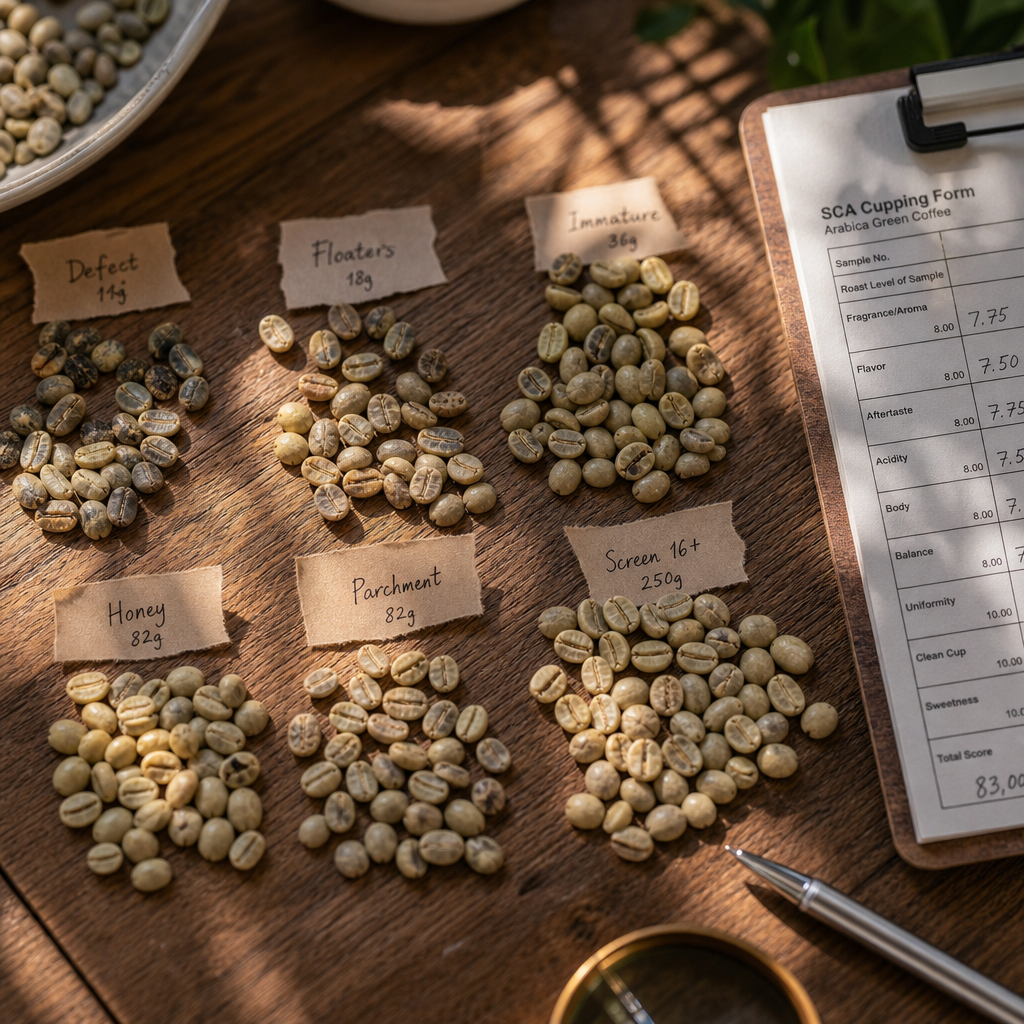
The Specialty Coffee Association's cupping protocol scores green coffee across ten attributes: fragrance and aroma, flavor, aftertaste, acidity, body, balance, uniformity, cleanliness of cup, sweetness, and overall impression. Each attribute is scored by a licensed Q-grader, and the total determines the coffee's grade. A score of 80 to 84.99 earns the label "specialty." Anything at 85 and above enters a narrower tier that most roasters never bother to pursue because the supply is genuinely limited and the sourcing relationships required to access it take years to build.
Gold Dot's 85-point minimum is a self-imposed filter that cuts out the majority of even well-reviewed green lots. In practice, this means walking away from coffees that are good but not exceptional, which is a harder business decision than it sounds when a lot is already in front of you and the relationship with the importer is established.
A common mistake among newer specialty roasters is treating the 80-point threshold as "good enough" and then marketing those coffees with the same language used for 87- or 88-point lots. The result is a credibility gap that erodes subscriber trust over time. Gold Dot avoids this by holding the 85-point line without exception.
What Q-Graders Are Actually Evaluating
A Q-grader is a certified professional trained and tested by the Coffee Quality Institute. The certification process includes 22 separate exams covering sensory skills, green coffee grading, and roasted coffee evaluation. When a Q-grader cups a coffee at Gold Dot, they are applying a standardized method that allows scores to be compared across origins, varieties, and processing methods without subjective drift.
The cupping is done blind, meaning the grader does not know the lot price or the producer before scoring. This is the only way to keep the process honest. Price anchoring is a documented cognitive bias, and a coffee that costs more per pound will score higher in a non-blind evaluation even when the quality does not support it.
Pro tip: When evaluating any specialty coffee subscription, ask the roaster directly whether their cupping scores come from in-house Q-graders or are simply repeated from importer documentation. Those are two very different things.
How Gold Dot Sources Traceable Coffee Beans
Traceable coffee beans means the supply chain is documented at every step from the farm or cooperative through export, import, and roasting. It is not enough to know the country. Gold Dot's sourcing model identifies the specific farm or processing station, the harvest year, the varietal, the altitude, and the processing method for every lot before a purchase decision is made.
This level of detail matters because it makes quality reproducible. When a specific Ethiopian natural-process lot from a named washing station scores 87 points, Gold Dot can return to that producer the following harvest and evaluate the new crop against a documented baseline. Without that traceability, you are buying coffee in the dark every single time.
Direct Trade Relationships vs. Importer Sourcing
Gold Dot works through a combination of direct trade relationships and relationships with specialty importers who share the same documentation standards. Direct trade is not always possible at small-batch volumes, and claiming it when a third-party importer is involved is a form of greenwashing that has become common in the specialty segment.
The honest approach, which Gold Dot takes, is to be specific about which lots come from direct relationships and which come through importers, while holding both to the same traceability and quality standards. The data consistently shows that transparent supply chains correlate with higher cupping scores because producers who know their name appears on the final packaging have a documented incentive to maintain quality.
"Traceability is not a marketing feature. It is a quality control mechanism. When a producer knows their farm name will be on a bag sold in California, they behave differently at harvest." - Specialty Coffee Association, Producer Relations Research
The Cupping Table Process at Gold Dot
The cupping table is where purchasing decisions are made, not confirmed. This is a distinction that separates disciplined specialty roasters from roasters who cup as a formality after a deal is already emotionally closed. At Gold Dot, a lot does not enter the roasting schedule until it has been cupped, scored, and approved against the 85-point minimum. Lots that score below the threshold are declined regardless of the supplier relationship or the per-pound price paid for the sample.
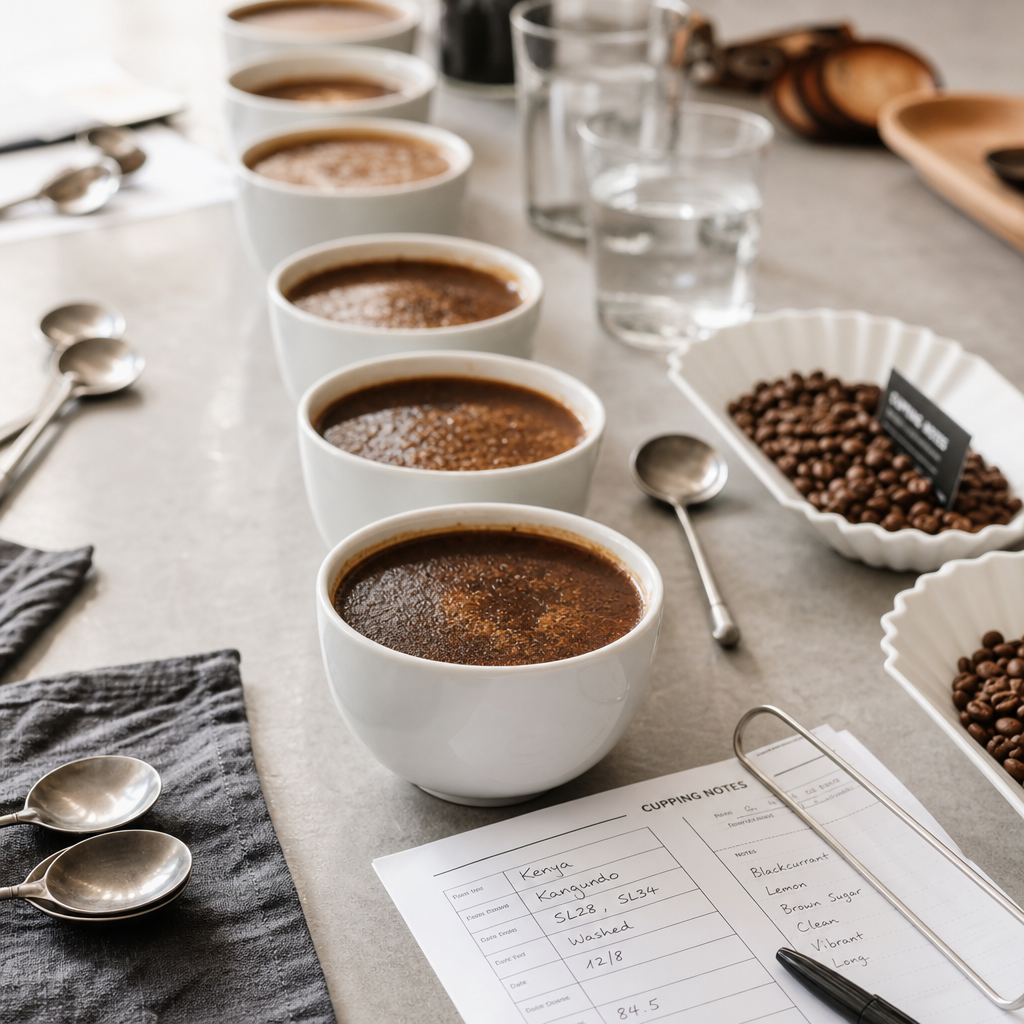
The SCA cupping protocol requires grinding coffee to a specific coarseness, brewing with water at 200 degrees Fahrenheit, and evaluating at timed intervals as the cup cools. The standardization is the point. It removes as many variables as possible so that the coffee itself determines the score.
How Roast Development Affects Cupping Scores
A green coffee that scores 87 points can score significantly lower if it is roasted poorly. Roast development time ratio, which is the percentage of total roast time spent after first crack, directly affects the expression of the flavors that earned the high score in the first place. Roasting too dark masks the origin characteristics that differentiate a single origin coffee from a commodity blend. Roasting too light leaves behind undesirable grassy or cereal notes.
Gold Dot's roasting decisions start from the cupping data. If a lot's score came from bright acidity and stone fruit notes, the roast profile is developed to preserve those characteristics, not to produce a standardized roast color that works for every coffee in the lineup.
Pro tip: The best way to evaluate whether a roaster's cupping scores are meaningful is to compare the flavor notes on the bag to what you actually taste. If they are consistently off, the cupping data is being used as marketing copy rather than as a quality record.
Single Origin Coffee: Why Provenance Matters
Single origin coffee forces accountability. When you blend, you can hide defects from one lot behind the strengths of another. When you offer a single origin, the quality of that specific farm, that specific harvest, and that specific processing method is entirely visible in the cup. There is nowhere to hide a poor lot inside a blend.
Gold Dot's commitment to single origin coffee is not an aesthetic preference. It is a quality enforcement mechanism. Every lot has to stand on its own merits before it earns a place in the subscription rotation.
Origin Characteristics That Differentiate Lots
Ethiopian naturals processed at high altitude washing stations consistently produce berry, floral, and wine-like notes because of the elevation, the heirloom varietal diversity, and the extended fermentation that natural processing allows. Colombian washed coffees from Huila or Nariño tend toward clean, bright acidity with caramel sweetness, a profile shaped by volcanic soil and temperature variation between day and night.
These are not invented flavor descriptions. They are predictable outcomes of specific agricultural and processing conditions, which is why traceability to the farm or washing station level makes them repeatable and communicable to a subscriber who wants to understand what they are drinking.
Roasting in Boulder Creek: The Craft Advantage
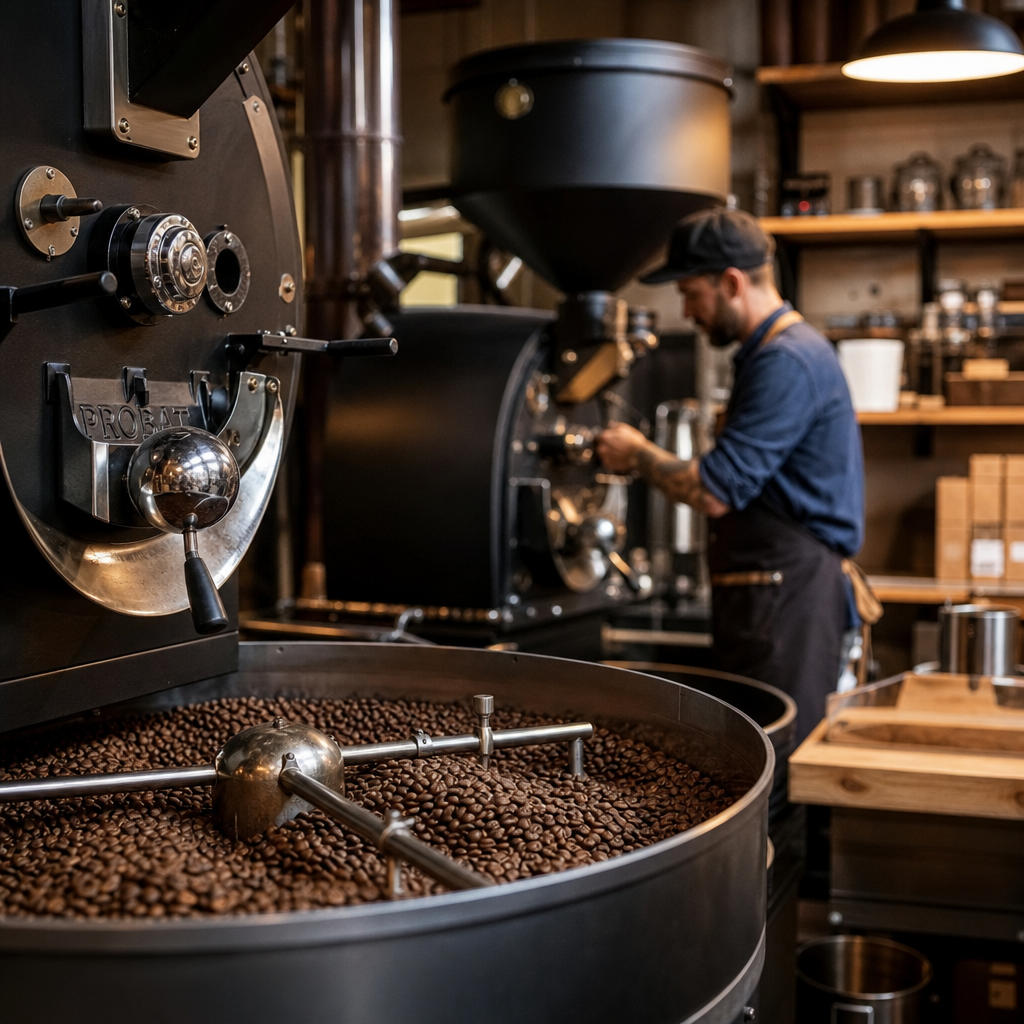
Boulder Creek, California sits in the Santa Cruz Mountains at an elevation that produces a specific ambient environment for roasting. The community has a deep culture of small-batch craft production, and Gold Dot's roastery operates in that tradition. The artisan coffee roaster Boulder Creek identity is not a geographic accident. It reflects a deliberate decision to operate at a scale where every roast can be supervised from start to finish by the same person who developed the profile.
At larger production facilities, roasting is increasingly automated, with profiles loaded into software and executed without hands-on intervention. That approach produces consistency across high volumes, but it removes the ability to make real-time adjustments based on how a specific green lot is behaving. Green coffee moisture content varies by lot, by how it was stored, and by seasonal humidity. A roaster who is physically present during every batch can respond to those variables in the moment.
Why Small-Batch Roasting Preserves Score-Worthy Flavor
The relationship between batch size and roast quality is well documented in specialty coffee research. Smaller batches allow for more even heat distribution, which means fewer underdeveloped or overdeveloped beans within a single roast. At scale, the thermal mass of large batch sizes creates a lag between heat application and the bean's response, which makes fine-tuned roast development significantly harder.
Gold Dot's small-batch model means that the 85-point-plus quality documented at the green coffee stage is actually preserved through the roasting process, rather than partially lost to inconsistent heat application across a larger drum.
How the Specialty Coffee Subscription Model Works
Gold Dot's specialty coffee subscription is structured around roast cycles, not inventory levels. This is a meaningful operational distinction. Most subscription services at scale roast in large batches, store the roasted coffee, and ship from that inventory as orders come in. The result is coffee that may be two to four weeks post-roast by the time it reaches a subscriber.
Gold Dot roasts to order on a scheduled cycle, which means subscribers receive coffee within days of the roast date. Specialty coffee's peak flavor window is generally considered to be seven to twenty-one days post-roast, after the initial CO2 degassing period. Receiving coffee within that window is not a minor detail. It is the difference between experiencing the flavors that earned the lot its score and experiencing a degraded version of them.
The Ceramics Integration in the Subscription
Gold Dot's pairing of specialty coffee with in-house designed ceramics is functional rather than purely aesthetic. The vessels are designed to complement specific brew methods, whether pour-over, French press, or espresso-style preparation. The weight, glaze porosity, and form factor of each piece is considered in relation to how heat retention and material texture affect the drinking experience.
This is a differentiator that competitors like Onyx Coffee Lab and Intelligentsia, both of which produce excellent coffee, do not offer. Heath Ceramics produces exceptional handmade pottery but does not combine it with traceable, subscription-based specialty coffee. Gold Dot occupies the specific intersection of both crafts, which is a genuinely uncommon position in the market.
Comparison: Gold Dot vs. Other Specialty Roasters
| Feature | Gold Dot Roasting | Onyx Coffee Lab | Intelligentsia Coffee |
|---|---|---|---|
| Minimum cupping score | 85+ on SCA scale, evaluated blind | High-quality specialty lots, scores not publicly specified per lot | Direct trade standards applied, scores vary by release |
| Traceability depth | Farm or washing station level on every lot | Strong producer-level information on most offerings | Direct trade relationships with farm-level info on key lots |
| Subscription roast timing | Roasted to order, shipped within days of roast | Regular roast cycles with subscription shipping | Subscription available, inventory-based fulfillment at scale |
| Ceramics or vessel pairing | In-house designed and handcrafted ceramics paired with coffee | No ceramics offering | No ceramics offering |
| Production scale | Small-batch, artisan roastery in Boulder Creek, CA | Mid-scale specialty roastery in Rogers, AR | Large-scale specialty operation, multiple US locations |
| Single origin focus | Primary offering is single origin; blends are secondary | Strong single origin program alongside blends | Mix of single origin and signature blends |
Frequently Asked Questions
What does an 85-point cupping score mean for the coffee in my cup?
An 85-point score on the SCA cupping scale means the coffee has been evaluated by a licensed Q-grader across ten sensory attributes and has scored above the standard specialty threshold. In practical terms, it means the coffee has no significant defects, has well-developed origin characteristics, and has been grown and processed with a level of care that is not common in commodity production. The score is a predictor of flavor complexity and cleanliness, both of which you can verify simply by tasting the coffee carefully.
Why does Gold Dot focus on single origin coffee rather than blends?
Single origin coffee requires every lot to perform on its own. There is no opportunity to compensate for a weak lot by blending it with a stronger one. Gold Dot's focus on single origin offerings is a direct extension of the sourcing and cupping process. If a lot earns its score independently, it does not need to be hidden inside a blend. This also makes it easier for subscribers to develop their palate because they can taste and learn specific origin characteristics rather than evaluating a composite flavor profile.
How is Gold Dot's specialty coffee subscription different from larger subscription services?
The primary difference is roast timing. Gold Dot roasts to order on a scheduled cycle, meaning subscribers receive coffee within days of the roast date. At larger services operating from warehouse inventory, coffee can be two to four weeks post-roast before it ships. The flavor compounds in specialty coffee, particularly the volatile aromatics that distinguish an 85-plus lot from a commodity coffee, degrade measurably over time after roasting. Receiving coffee within its peak window is not a minor convenience. It directly affects the quality of what you taste.
What makes Boulder Creek a meaningful location for an artisan coffee roaster?
Boulder Creek sits in the Santa Cruz Mountains at an elevation that supports small-batch craft production in a community with a long tradition of artisanal work. The location allows Gold Dot to operate at a scale where every roast is supervised hands-on rather than managed through automated profiles. The ambient environment, the community context, and the deliberate choice to remain small-batch rather than scale production for volume all contribute to a roasting operation that can respond to the specific behavior of each green lot rather than applying a standardized process to every coffee.
Are Gold Dot's cupping scores assigned in-house or taken from importer documentation?
Gold Dot cups every lot in-house using the SCA standardized protocol and evaluates scores blind before any purchasing decision is finalized. Importer documentation provides a starting reference point for lot evaluation, but the purchase decision is based on Gold Dot's own cupping results. A lot that scores below 85 in Gold Dot's own evaluation is declined regardless of what an importer's documentation says. This is the only approach that maintains the integrity of the 85-point minimum as a genuine quality filter rather than a marketing claim repeated from a third party.
How does the ceramic vessel pairing add to the specialty coffee experience?
Gold Dot's in-house ceramics are designed with specific brew methods in mind. The material, weight, glaze, and form of each vessel affect heat retention, pour dynamics, and how the coffee interacts with the vessel during drinking. This is a functional consideration, not just an aesthetic one. For subscribers who invest in understanding and experiencing specialty coffee at the level that an 85-plus lot makes possible, the vessel is part of the sensory context of that experience. It is the same logic that applies to wine glassware, where form genuinely affects what you taste.
Have you received a Gold Dot subscription or experienced a specialty coffee that genuinely changed how you think about what is in your cup? Share what stood out to you below.
References
- Specialty Coffee Association: cupping protocols, Q-grader certification standards, and green coffee grading resources
- Coffee Quality Institute: Q-grader program documentation and specialty coffee quality standards
- Statista: specialty coffee market size data, consumer subscription trends, and premium beverage industry statistics
- Forbes: reporting on specialty food and beverage subscription models and direct-to-consumer craft brands
- USDA Foreign Agricultural Service: green coffee import and export data, traceability standards, and origin documentation frameworks